

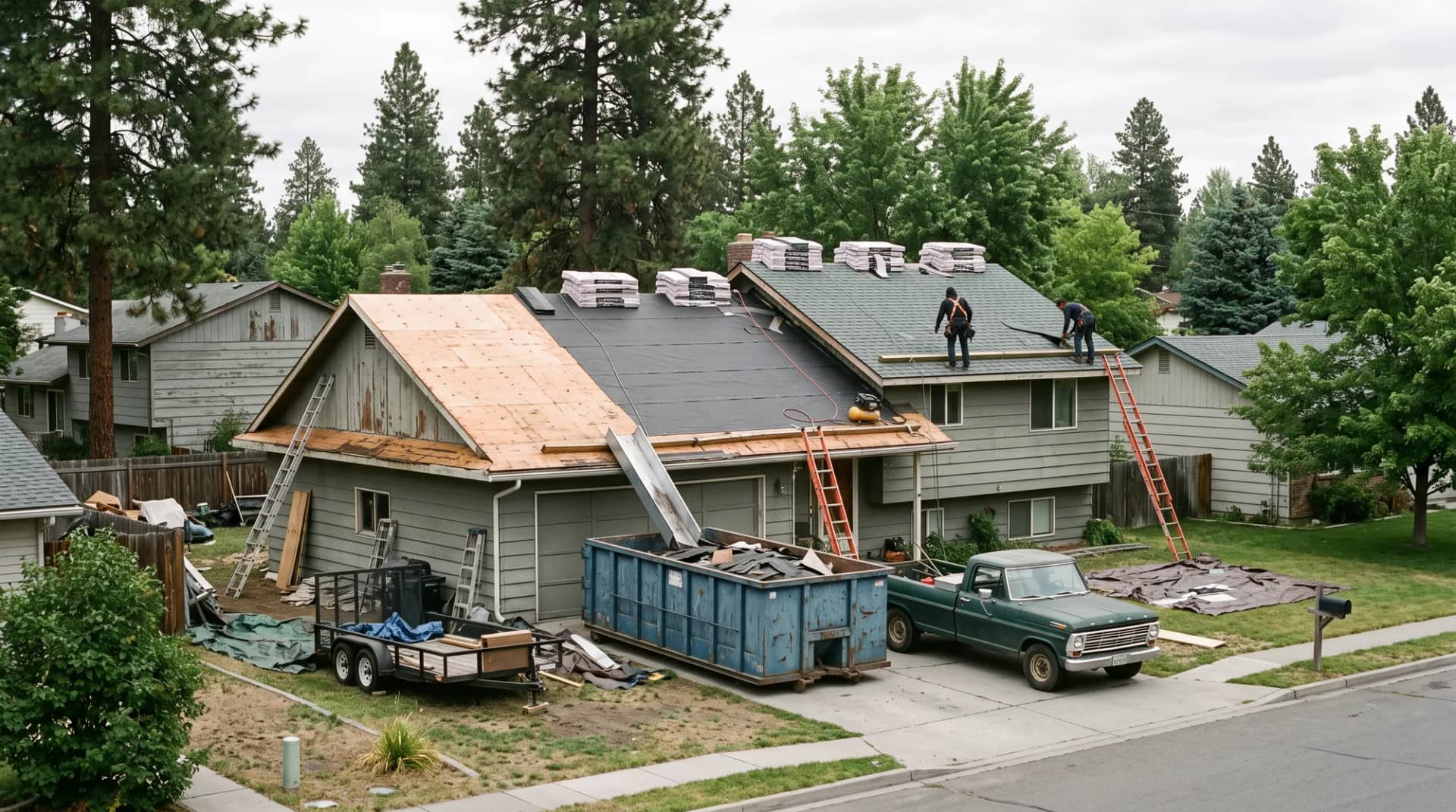
Every Spokane roof price we could find from a named source, on one page. Arrow Point Roofing, a licensed roofer in Spokane Valley, publishes $8,000 to $15,000 for a standard asphalt replacement, $14,000 to $28,000 for enhanced asphalt, and $18,000 to $45,000 for standing-seam metal. River City Roofing prices by the unit instead — $4 to $6 per square foot installed, or $800 to $1,000 per roofing square. Those are the local numbers as of July 2026, and the table below reconciles them. What moves your own number inside that spread is pitch, tear-off, decking, and the assembly under the shingles.
A roof in Spokane works harder than a roof in a mild climate, and the bid reflects it. We sit through real freeze-thaw — daytime melt followed by overnight refreeze — for weeks at a stretch. Water finds its way under shingles, freezes, expands, and pries them loose. That same cycle builds ice dams along the eaves, where meltwater backs up behind a ridge of ice and pushes under the roof covering instead of running off. The defenses against all of that — a proper ice-and-water shield membrane at the eaves and valleys, correct ventilation, clean flashing — are exactly the line items a cut-rate bid leaves out.
Then there's the snow. Spokane County's code carries snow-load and ice-and-water-shield requirements that a mild-climate roof simply doesn't have to meet, and roofs here are re-roofed to carry them. Steeper pitches that shed snow, heavier underlayment, and beefier fastening schedules all cost more than the generic roof a national cost calculator assumes. Add summer hail and the occasional wind event, and you have a market where the cheapest bid is usually the one that skipped the part you can't see from the ground.
The practical takeaway: in Spokane, you're not just buying shingles. You're buying the assembly underneath them. Two bids on the same house can differ by thousands and both be “asphalt” — the gap is almost always in the underlayment, ventilation, flashing, and whether the crew tears off to the deck or shingles over the old roof. The ranges on this page tell you what a Spokane roof costs; an itemized bid tells you what yours costs.
The spread is real. Make every bidder itemize, then compare the assembly under the shingles — that is where thousands of dollars hide.
Roughly speaking, a Spokane re-roof breaks down into material (shingles or panels, underlayment, flashing, vents, fasteners), labor (tear-off, deck prep, installation, cleanup), and the unglamorous middle layer — permits, dumpster and disposal, and the decking repairs nobody can price until the old roof comes off.
Tear-off matters more than homeowners expect. Pulling the old roof down to the deck lets the crew see and fix what's rotting underneath; a “roof-over” that lays new shingles on top of old is cheaper today and a liability later, and it adds dead weight your snow-loaded deck doesn't need. Most reputable Spokane roofers quote a full tear-off as the default for that reason.
Decking is the wildcard. The crew can't know how much sheathing is soft or rotted until they're standing on the bare deck, so a written bid should carry a per-sheet rate for replacement rather than a flat promise. Budget a contingency for it. On older Spokane homes — especially anywhere ice dams have been working at the eaves for years — some deck repair is the norm, not the exception.
The sources disagree, and the disagreement is the useful part. Arrow Point prices a whole job by material; River City prices by the square foot; homeyou runs a national model with a Spokane label on it. A per-square-foot figure hides the thing that moves your bid most, which is the assembly under the shingles. Use these to sanity-check a quote, then compare the quotes line by line.
- Arrow Point Roofingread 2026-07-12
A licensed Spokane Valley roofer (WA registration ARROWPR791J7) publishing its own material-by-material pricing. The only genuinely local, first-party price list we found.
- River City Roofingread 2026-07-12
A Portland-based roofing company that publishes per-square-foot and per-square figures for the Spokane market — the only per-unit local pricing we found.
- homeyouread 2026-07-12
A lead-generation site whose Spokane figures come from a national model rather than local quotes — which is why they run below every local source here.
Steep, snow-shedding pitches and second-story access slow the crew and demand fall protection, pushing labor up. A walkable single-story ranch sits at the low end of every range; a steep two-story sits near the top.
A full tear-off to the deck is the Spokane default — it adds disposal and labor but lets the crew fix rotted sheathing and avoids piling dead weight on a snow-loaded roof.
No one prices rotted sheathing until the old roof is off. Older homes and any roof with a history of ice dams usually need some deck replacement — budget the per-sheet add-on.
Asphalt vs. standing-seam metal is the biggest single lever, but the underlayment, ice-and-water shield, ventilation, and flashing explain why two “asphalt” bids can differ by thousands.
Valleys, dormers, multiple chimneys, skylights, and low-slope sections all add flashing and fabrication. Simple gable roofs are cheapest; cut-up rooflines cost more to seal correctly.
Late spring through early fall is install season, when shingles seal properly. After a hail or wind event, demand spikes and lead times stretch — quotes can firm up accordingly.
Asphalt vs. standing-seam metal in our climate
Architectural asphalt shingles are the practical default here, and for good reason: they're affordable, widely stocked, and when installed with proper ice-and-water shield and ventilation they handle Spokane's freeze-thaw and hail for 25 to 30 years. The vast majority of re-roofs in the area are asphalt, and a well-installed asphalt roof is not a compromise — it's the right call for most houses.
Standing-seam metal costs roughly two to three times as much up front, and it earns that premium in specific situations. It sheds snow rather than holding it, its concealed-fastener seams hold up against freeze-thaw far longer than exposed fasteners, and it can last 40-plus years — often the last roof a house needs. If you're on a steeper pitch, fighting chronic ice dams, or planning to stay put for decades, metal pencils out. If you'll likely sell inside fifteen years, asphalt is usually the smarter spend.
Whatever the material, the install details decide how long it lasts. Ice-and-water shield at the eaves and valleys, balanced intake-and-exhaust ventilation, and properly fabricated flashing at every chimney, valley, and wall do more for a Spokane roof's lifespan than the brand of shingle on the bundle. When you compare bids, compare those line items — not just the headline material.
Most Spokane asphalt re-roofs on an average home are done in one to three working days once the crew is on site, but the full path from first bid to finished roof usually spans a few weeks — longer in peak season or after a storm. Replacement is scheduled late spring through early fall, before the freeze sets in.
How to read a Spokane roofing bid
A real bid is itemized. It names the shingle or panel system, spells out the underlayment and ice-and-water shield, states the ventilation plan, lists flashing and any chimney or skylight work, carries a per-sheet decking-repair rate, and puts the workmanship warranty in writing alongside the manufacturer's material warranty. If a quote is one round number with no breakdown, you can't tell what was left out — and in this climate, what's left out is what fails first.
Confirm the contractor is the one doing the work you think you're buying. Washington requires every roofer to register with Labor & Industries (L&I), carry a contractor bond, and hold liability insurance; you can verify any license number yourself at secure.lni.wa.gov before you sign. Ask whether the crew is in-house or subcontracted, who pulls the permit, and who carries the workmanship warranty if something leaks in year three.
Collect at least three written bids and read them side by side. The useful comparison isn't the bottom line — it's where the numbers diverge. Start with our Spokane roofing directory: licensed local roofers, each with a dated licence check and a link to the state record. Pick three, hand them all the same list of questions, and let the differences do the work.
Start here: licensed Spokane roofing pros with a verified registration. Hand them the same scope and get three written, itemized bids back.
20 & 20 Exteriors
Roofing
509 Roofs LLC
Roofing
Advance Roofing LLC
Roofing
The questions homeowners ask us most
How much does a new roof cost in Spokane?
Two sources price a Spokane roof, and they do it two different ways. Arrow Point Roofing, a licensed Spokane Valley roofer, lists $8,000–$15,000 for a standard asphalt replacement, $14,000–$28,000 for enhanced asphalt, and $18,000–$45,000 for standing-seam metal. River City Roofing prices by the unit: $4–$6 per square foot installed, or $800–$1,000 per roofing square. Both figures were checked on 12 July 2026 and are linked on this page. Pitch, stories, decking condition, and flashing are what pull one roof to the top of a range and another to the bottom, so use these numbers to sanity-check the written, itemized bid you get on your own house.
Why does Spokane's climate add to the cost of a roof?
Freeze-thaw cycles and ice dams demand an ice-and-water-shield membrane at the eaves and valleys plus proper ventilation, and Spokane County's snow-load requirements mean heavier assemblies than a mild climate asks for. Those defenses are exactly what a cut-rate bid leaves out, and they are why two bids that both say “asphalt” can differ by thousands. When you compare quotes, compare the underlayment, ventilation, and flashing line items — not just the total.
Is asphalt or metal roofing better for Spokane's climate?
Architectural asphalt shingles are the practical default — affordable, widely stocked, and rated for 25–30 years when installed with proper ice-and-water shield and ventilation. Standing-seam metal costs two to three times more up front but sheds snow, resists freeze-thaw, and can last 40-plus years. Metal pays off if you have a steep pitch, chronic ice dams, or plan to stay for decades; otherwise asphalt is usually the smarter spend.
Is it cheaper to repair or replace my roof?
A targeted repair makes sense for isolated damage — a few torn shingles, one bad flashing detail — on a roof that still has years of life in it. Once you're patching the same areas repeatedly, the shingles are curling or losing granules across the whole roof, or the decking has gone soft, replacement is the better spend, because repairs on a failing roof are money you won't get back. When you call for a repair quote, ask the roofer to price the diagnosis and the fix separately, and to say in writing whether that cost is credited back if you end up replacing.
What hidden costs should I budget for in a Spokane re-roof?
Three things surprise homeowners: decking repair (rotted sheathing can't be priced until the old roof is off — budget the per-sheet add-on), chimney and skylight re-flashing, and permit plus disposal fees. A roof with a history of ice dams almost always needs some deck work. A good bid carries a per-sheet decking rate in writing rather than promising zero.
How many roofing quotes should I get?
At least three written, itemized bids. Compare where the numbers diverge — underlayment, ice-and-water shield, ventilation, flashing, decking rate, and warranty — not just the bottom line. Two “asphalt” bids can differ by thousands because of what's in (or missing from) the assembly.
When is the best time to replace a roof in Spokane?
Late spring through early fall. Asphalt shingles seal best in moderate temperatures, and crews avoid working over ice and snow. If you have active leaks or storm damage in winter, reputable roofers will do a temporary repair to get you through, then schedule the full replacement once the weather clears.