

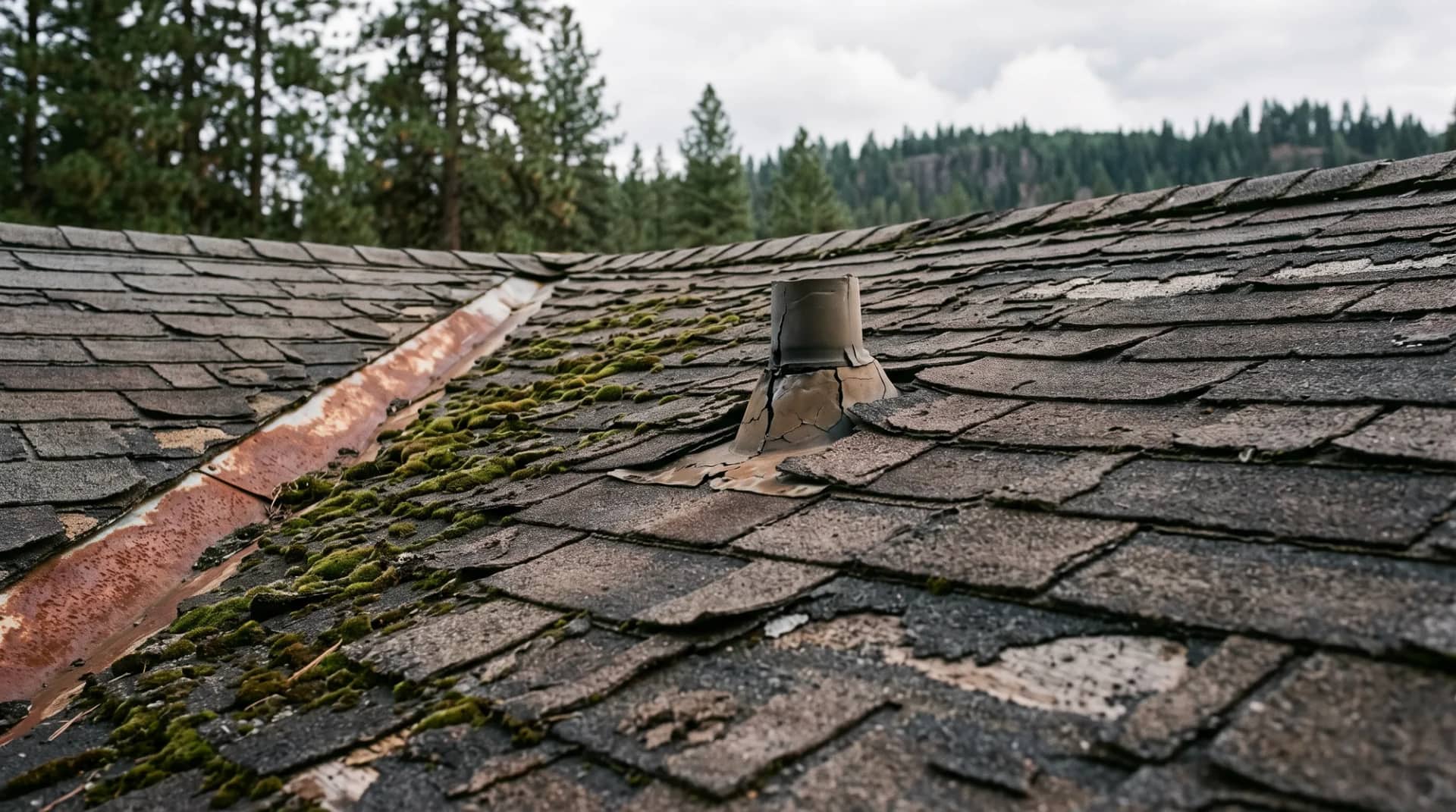
A well-installed architectural asphalt roof in Spokane lasts roughly 20 to 25 years — sometimes closer to 30 if it was vented and flashed correctly and the weather was kind. But age alone doesn't settle the question. Plenty of 18-year-old roofs are fine, and plenty of 22-year-old roofs quietly failed years ago. The real question isn't how old the roof is; it's whether it's still doing its one job: keeping water out and staying put through a wind or snow event. This guide walks you through reading the warning signs, telling a repair problem from a replacement problem, and knowing when it's time to stop patching.
Spokane is hard on roofs, and it ages them faster than a mild climate would. We sit through weeks of real freeze-thaw — daytime melt, overnight refreeze — that works water under the shingles, freezes it, and pries them loose. That same cycle builds ice dams along the eaves, where meltwater backs up behind a ridge of ice and forces its way under the roof covering instead of running off the edge. Add summer UV, the occasional hailstorm, and gusty spring wind off the Palouse, and a roof here does more work in 20 years than a coastal roof does in 30. The lifespan figures you read nationally tend to run a little optimistic for the Inland Northwest.
The good news is that most of the signs that matter are visible from the ground or from inside your attic — you don't need to climb up, and you shouldn't. A curled shingle line, granules piling up in the gutters, a water stain spreading across the attic sheathing: those tell you most of what you need to know. What follows is essentially the same checklist a reputable roofer runs before quoting you, so you can gauge where your roof stands before anyone is on the phone.
Condition beats age every time — a failing 15-year-old roof needs work long before a sound 25-year-old one does.
The signs a Spokane roof is wearing out
No single sign means your roof is finished. What matters is the pattern. One cracked shingle after a windstorm is a repair; the same damage showing up across every slope is a roof at the end of its life. Walk your gutters and eyeball your eaves after any big weather, and watch for the signs below. The more of them you can tick off — and the more widespread they are — the closer you are to replacement rather than another patch.
- Curling, cupping, or clawing shingles — edges lifting, or the whole shingle dishing or turning up. This is asphalt reaching the end of its service life, and it is rarely confined to one spot.
- Bald patches and granules collecting in your gutters or at the base of the downspouts. Those granules are the shingle's UV armor; once they are washing off in quantity, the asphalt underneath breaks down quickly.
- Cracked, torn, or missing shingles after a wind event — especially if you are finding shingle pieces in the yard more than once a season.
- Daylight through the roof deck, or water stains and damp sheathing, when you look in the attic. Any daylight where there shouldn't be is a direct path for water.
- Brown staining or peeling paint along the eaves and on ceilings near exterior walls — the signature of ice-dam leaks backing up under the shingles in winter.
- A sagging ridge line, or a deck that dips or feels soft underfoot, which means moisture has reached the sheathing or the structure below it.
- Widespread moss or dark streaking, particularly on north-facing slopes that stay damp. Moss holds moisture against the shingle and lifts it as it spreads.
- A roof past roughly 20 to 25 years old — especially one where you don't know when it was last replaced or whether it was ever torn off down to the deck.
A five-minute ground-level roof check
You can learn most of what you need without ever leaving the ground or setting foot on a ladder — which is exactly where you should stay. Roofs are steep, slick, and unforgiving, and a fall is a far worse outcome than a leak. Pick a dry, bright day, grab a pair of binoculars and a flashlight, and work through these five checks.
- 01Walk the perimeter with binoculars
Circle the house slowly and glass each slope from the ground. Look for curling, cupping, or clawing shingles, bald patches where the granules have worn through, and any cracked, lifted, or missing shingles. Pay special attention to the south- and west-facing slopes, which take the most sun, and to anything that looks different from the shingles around it.
- 02Check the gutters and downspouts for granules
Look inside the gutters and at the splash point below each downspout for a buildup of sand-like grit — coarse black or gray granules that have washed off the shingles. A little is normal on a new roof; a steady accumulation on an older roof means the shingles are shedding their protective layer and breaking down.
- 03Inspect the eaves, valleys, and flashing
Aim the binoculars at the roof's weak points: the eaves where ice dams form, the valleys where two slopes meet and water concentrates, and the metal flashing around chimneys, vents, and skylights. Look for rusted, lifted, or missing flashing, worn shingles in the valleys, and staining or rot along the eaves and fascia.
- 04Go into the attic with a flashlight
On a bright day, turn off the attic light and look for any daylight coming through the roof deck — that is a direct leak path. Then sweep the flashlight across the underside of the sheathing and the rafters, checking for water stains, dark streaks, damp or crumbling wood, mold, and matted insulation. Do this after a rain or a winter thaw if you can, when active leaks show themselves.
- 05Note the roof's age and repair history
Pull up whatever records you have of when the roof was installed or last replaced, and whether it was a full tear-off or a layover on top of old shingles. Add up how many repairs you have paid for in the last few years and whether they cluster in the same spots. A roof past 20 to 25 years, or one you are repeatedly patching, is telling you something the shingles have probably already shown you.
When a repair is enough, and when it isn't
The deciding question is whether the damage is isolated or systemic. A dozen shingles torn off by a spring windstorm on an otherwise sound, 12-year-old roof is a repair — a roofer replaces the missing shingles, checks the surrounding area, and you are good for years. The same is true of a single leak traced to failed flashing around a chimney or a cracked plumbing-vent boot. When the roof underneath is healthy and the problem is one identifiable spot, fixing that spot is the right call and the cheaper one.
Replacement is the answer when the problems are spread across the whole roof or reach into the structure. Shingles curling and losing granules everywhere rather than on one slope; a deck that is soft or sagging; leaks that keep returning or show up in new places each season — those are signs the roof system has reached the end of its life, and no single repair gets ahead of it. Widespread ice-dam staining along the eaves usually points the same direction, because it means the underlayment and ventilation that should protect the eaves are no longer doing their job.
Watch out for the false economy of patching a roof that is already failing. Once you are calling for repairs every year, the bills add up to a real fraction of a new roof — except you are spending that money on a roof that keeps leaking, earns no warranty, and gets no fresh lifespan for the trouble. Worse, every winter you leave a failing roof in place is another season of meltwater working into the decking, which turns a straightforward re-roof into a re-roof plus sheathing replacement. If a roofer you trust tells you the repairs have stopped making sense, that is usually the straight read rather than a sales pitch — get it in writing from two or three of them and see whether they land in the same place.
Turning a verdict into a good re-roof
If the signs point toward replacement, get at least three written, itemized bids before you commit. A real bid names the shingle system, spells out the underlayment and the ice-and-water shield at the eaves and valleys, states the ventilation plan, and carries a per-sheet rate for any rotted decking the crew finds once the old roof is off. Compare where the numbers diverge, not just the bottom line — in this climate, the cheapest bid is usually the one that skipped the parts you can't see from the ground.
Before you sign anything, verify the contractor. Washington requires every roofer to register with Labor & Industries (L&I), carry a contractor bond, and hold liability insurance, and you can check any registration number yourself in about a minute at secure.lni.wa.gov. Confirm the registration is active, the bond and insurance are current, and the business name on the bid matches the one on the license. Skipping this step is how homeowners end up with an unlicensed crew and no recourse when a leak turns up in year two.
Time the work for late spring through early fall if you can. Asphalt shingles need moderate temperatures to seal properly, and crews would rather not work over ice and snow — so a roof replaced in July simply goes on better than one rushed in during a January thaw. If you have active leaks or storm damage in the dead of winter, a reputable roofer will do a temporary repair to get you through and schedule the full replacement once the weather clears. Book early in the season, too: after a hail or wind event, the good crews fill up fast and lead times stretch.
When you are ready to compare roofers, start with our Spokane roofing directory: licensed local companies, each with a verified registration number, the date it was checked, and a link to the state record. Hand three of them the same checklist and the same itemized questions and you will be comparing like for like. Or send us the project and we will take it from there — a real person at the Spokane desk reads every one that comes in and comes back to you with next steps.
Start here: licensed Spokane roofing pros with a verified registration. Hand them the same scope and get three written, itemized bids back.
20 & 20 Exteriors
Roofing
509 Roofs LLC
Roofing
Advance Roofing LLC
Roofing
The questions homeowners ask us most
How do I know when my Spokane roof needs replacing?
Watch for a pattern, not a single flaw. Widespread curling or cupping shingles, granules collecting in your gutters, cracked or missing shingles after wind, daylight or water stains in the attic, ice-dam staining along the eaves, a sagging deck, or heavy moss all point toward replacement — especially on a roof past 20 to 25 years old. Isolated damage on an otherwise sound roof is usually a repair. The more of those signs you can tick off, and the more widespread they are, the closer you are to needing a new roof rather than another patch.
How long does an asphalt roof last in Spokane?
Roughly 20 to 25 years for a well-installed architectural asphalt roof, and sometimes closer to 30 if it was properly vented and flashed. Spokane's freeze-thaw cycles, ice dams, summer UV, and occasional hail tend to age roofs a little faster than national averages suggest, so treat the low end of that range as realistic here. Condition decides it more than the calendar does: plenty of 18-year-old roofs are sound, and plenty of 22-year-old ones failed years ago.
Is it a repair or a full replacement — how do I tell?
It comes down to whether the damage is isolated or systemic. A few shingles torn off by wind, or a single leak from failed flashing, on an otherwise healthy roof is a repair. Curling and granule loss across the whole roof, soft or sagging decking, repeated leaks, or widespread ice-dam staining mean the roof system is at the end of its life and replacement is the better spend. Once you are paying for repairs every year, patching a failing roof usually becomes money you won't get back.
What does ice-dam damage look like?
Inside, it shows up as brown water staining or peeling paint on ceilings and walls near the eaves and exterior walls, often appearing during winter thaws. Outside, you may see a thick ridge of ice and icicles along the gutter line, lifted or damaged shingles at the eaves, and stained or rotting fascia. Ice dams form when heat escaping into the attic melts snow higher up the roof, and that meltwater refreezes at the cold eaves and backs up under the shingles. Recurring ice-dam leaks usually mean the eave's underlayment and the attic's ventilation and insulation need attention — not just a surface patch.
Can I inspect my own roof safely?
Yes — from the ground and from your attic, which is where you should stay. Walk the perimeter with binoculars to check the shingles, look in the gutters for granules, glass the eaves, valleys, and flashing, and go into the attic with a flashlight to look for daylight, water stains, and damp wood. Don't climb onto the roof yourself; it is steep, slick, and a fall is far worse than a leak. If the ground-level check turns up warning signs, have a licensed roofer do the up-close inspection.
Will insurance cover storm or hail damage to my roof?
Often, yes — most Washington homeowner policies cover sudden storm, wind, and hail damage, though they typically won't pay to replace a roof that is simply worn out from age. If you suspect storm damage, document it with dated photos, note the date of the weather event, and get a licensed roofer's written assessment before you file. Your insurer may send an adjuster, and having an independent inspection in hand helps make sure legitimate damage isn't written off as normal wear. Read your policy for the deductible and for any roof-age or actual-cash-value clauses, which can change what you actually collect.
What is the best time of year to replace a roof in Spokane?
Late spring through early fall. Asphalt shingles seal best in moderate temperatures, and crews avoid working over ice and snow, so a roof installed in the warm months simply goes on better. Book early in the season if you can — after a hail or windstorm, the reputable crews fill up and lead times stretch. If you have active leaks in winter, a good roofer will do a temporary repair to get you through and schedule the full replacement once the weather turns.